
About us
With 70 years of experience, we are a trusted partner to the global pharmaceutical industry. We cover the entire development cycle – from synthesis process optimization and scale-up to large-scale production.
We are recognized internationally as a benchmark in the CDMO sector, delivering high-quality and innovative solutions that combine scientific expertise, industrial excellence and a strong commitment to building solid partnerships.
Experience
shaped by decades of being a CDMO
Simplicity
an integrated and efficient operating model
Reliability
strong investments in R&D, industrialization and assets
Our production sites

Integrated manufacturing
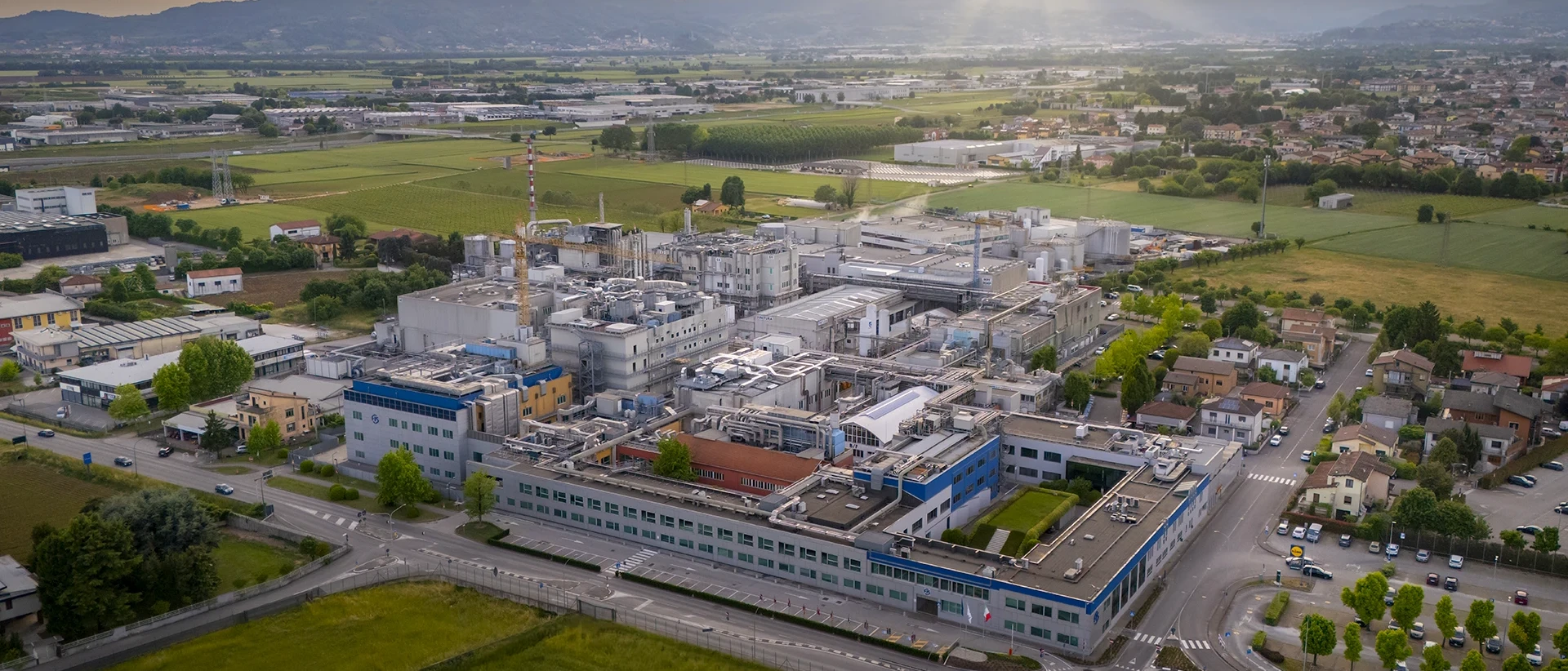
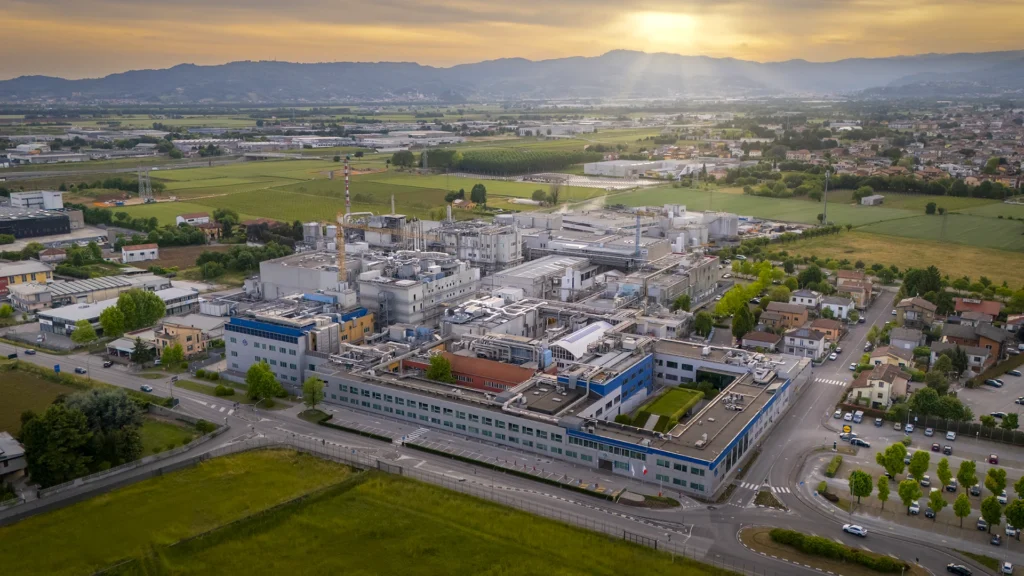
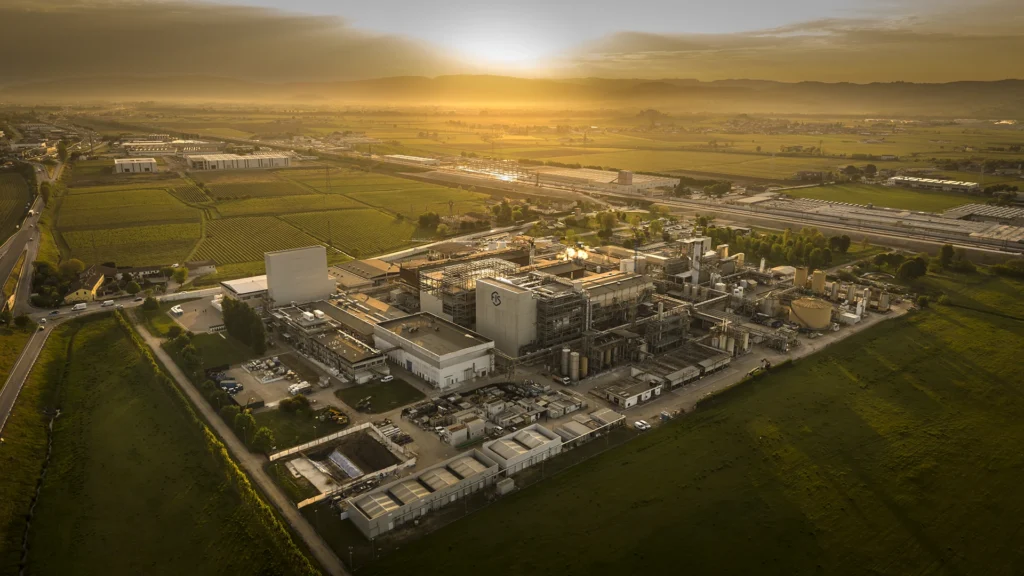
Our three plants, located in close geographical proximity, are strongly interconnected and united by a solid shared legacy. Together, they create a fully integrated network with a versatile capacity range from 10 L to 18,000 L, allowing us to support a wide variety of production requirements.
GMP & ISO certified for
Quality ISO 9001
Environment ISO 14001
Safety ISO 45001
Information Security ISO 27001
Business Continuity ISO 22301
Gold medal Award by Certiquality
Growth story
Our purpose
We combine expert knowledge, integrated services and dedicated teams to provide comprehensive solutions tailored to our customers’ needs. Our goal is simple: we want to bring treatments that patients can trust to the market faster.
Reliability defines our work, which is built on accuracy, consistency and long-standing pharmaceutical expertise.
People are the center of everything we do, with patients relying on safe and effective treatments, and partners trusting us to make all this possible.
“The fastest formula to reliability for the therapies people need”
Strategic growth
“Next Level” is our strategic ambition
By 2028, we strive to become the global partner of choice for the reliable development and manufacturing of APIs.
Our growth will be driven by stronger collaborations with leading pharmaceutical and biotechnology companies, and by reinforcing our leadership in peptides and bioavailability‑enhancement technologies. What sets us apart is the combination of distinctive solutions, proven performance, and expert staff.
We listen, adapt, and deliver – ensuring every project receives the focus, flexibility, and reliability our partners expect. This mindset empowers our teams and supports lasting partnerships built on trust.
Five pillars that guide us in achieving our goals
Lead in our core business
Strengthening our position in API development and manufacturing with uncompromising reliability and quality.
Diversifying and growing in new areas
Expanding into high-value and emerging segments to broaden our impact and create new opportunities for our partners.
Drive operational excellence
Continuously improving efficiency, digitalization and performance across all sites and processes.
Enhance our customer range and solutions
Providing tailored, end-to-end services that anticipate customer needs and deliver measurable value.
Build the best team and workplace in the CDMO industry
Creating an environment where people can grow and feel empowered to share in our global success.
Health, Safety & Environment
At FIS, safety is a core value, fully embedded in our sustainability and development strategy. Our commitment goes beyond regulatory compliance: we adopt a holistic and structured approach to protect people, safeguard our assets, and preserve the environment in which we operate.
Our mission
We are committed to providing a safe, healthy and safe working environment, pursuing the “zero accidents” goal. Our mission is to prevent injuries, occupational diseases and major incidents by:
- Adopting the best techniques available
- Servicing and keeping our assets reliable
- Integrating Health, Safety and Environmental protection into all our business decisions.
These principles are essential to support FIS’ business continuity and fostering innovation.
The pillars of our HSE Management
Our Health, Safety and Environment (HSE) policy is built on clear principles that guide every strategic and operational decision we make:
- Compliance and High Standards
We ensure full compliance with applicable law and regulations, and voluntarily adhere to internationally recognized standards, anticipating our stakeholders’ expectations. - Ongoing Improvement
We continuously monitor, measure and evaluate our performance to enhance the effectiveness and efficiency of our Management Systems. - Risk Management
Our Management System is based on the consistent application of structured risk management methodologies to support informed decision-making processes and safe operational practices. - Transparency and Engagement
We maintain an open and cooperative relationship with local communities and authorities, fostering mutual trust and accountability.
A culture of prevention and shared responsibility
At FIS, we share the responsibility of safety at all organizational levels.
- Training and Awareness
We promote lifelong training programs to ensure that all our employees understand the risks and the impact of their activities on health and safety. - Worker Consultation
We actively encourage the involvement of workers and their representatives in shaping and improving the safety principles, in line with our Code of Ethics. - Safe Supply Chain
We require suppliers and contractors to comply with our Health and Safety standards, and periodically assess their performance through dedicated evaluations.
Risk management and incident prevention
Since we operate in the chemical-pharmaceutical sector, managing industrial risks properly is a strategic priority.
- Accident Prevention
All of FIS sites adopt adopts a dedicated Major Accident Prevention Policy Document to mitigate structural and operational risks. - Emergency Management
We ensure effective emergency preparedness and response, through appropriate plans developed in close coordination with competent authorities, to protect people and surrounding communities.
Ethics & integrity
Ethics and integrity are the foundation of FIS relationship with its customers, suppliers, partners and all stakeholders. The Company promotes its core values, defines clear conduct rules and implements an effective internal control system, in line with applicable regulations and best international practices.
Key governance tools are:
- Standard of Business Conduct
- Organization, Management and Control Model pursuant to Legislative Decree 231/2001 (hereinafter the “Model”)
- Whistleblowing Policy.
Ethics
FIS complies with the law and the highest ethical standards. The Standard of Business Conduct define the principles applicable to all FIS employees and partners. The Company also adopted an Organization, Management and Control Model pursuant to Legislative Decree 231/2001 (“Model 231”) consisting of a General Section and Special Sections dedicated to different offence categories, to prevent unlawful conduct and strengthen internal controls.
Standard of Business Conduct
The Standard of Business Conduct outline the core principles that guide the behavior of all FIS employees, suppliers, consultants and business partners, ensuring their integrity, transparency, and accountability.
Organization, Management & Control Model
FIS is committed to conducting its business with integrity, honesty, fairness, transparency, and good faith. These values are the backbone of all activities, decisions, and behaviors across the organization, and represent a fundamental standard of conduct for anyone acting on behalf of the Company.
To promote and safeguard these principles, FIS has implemented a comprehensive system of internal policies and controls, including an Organization, Management and Control Model, pursuant to Legislative Decree 231/2001. This framework is designed to prevent unlawful conduct, support ethical decision-making processes, and protect the Company’s integrity and reputation.
Whistleblowing
FIS promotes an ethical, transparent, and accountable environment, where every individual can report – without fearing any retaliation – any unlawful conduct or violation of the law, the Standards of Business Conduct, and internal procedures.
To support this commitment, the Company provides a dedicated whistleblowing channel – https://fisvi.integrityline.com/ -, which can also be used anonymously, ensuring:
- Confidentiality of the whistleblower’s identity and of all information provided;
- Protection against any form of retaliation or discrimination;
- Report handling through independent, impartial, and properly documented processes.
FIS encourages its employees, collaborators, and third parties to use this channel whenever they become aware of a conduct that does not align with the Company’s values or with applicable regulations.
Board of Directors
FIS governance is based on a traditional model, including the Shareholders Meeting, the Board of Directors and the Board of Statutory Auditors. The Board of Directors, with 3 members – including Chairman and CEO Daniele Piergentili – is the Company’s managing body, and was appointed for the last time on 22 April 2026. The BoD is in charge of reviewing and approving the strategic, industrial, financial and sustainability reviews, Moreover, it defines the direction of the Internal and Risk Management Control System, in line with the Company’s strategies, and reviews its compliance and effectiveness annually.
The Board of Directors – through its Chairman and CEO, and supported by C-Level Top Management, with specific proxies based on their roles and the processes they manage – exerts strategic control, to identify, prevent and mitigate all risks, including environmental and social risk. Compliance issues, the Ethical Code, and Model 231 are updated directly by the BoD’s Supervisory Body, pursuant to Legislative Decree 231/2001, to ensure an over-reaching vision on the main governance aspects.

Daniele Piergentili
Chair of the Board of Directors and CEO

Michela Schizzi
Chief Legal Officer

Manuel Barreca
Chief Financial Officer
Governance, Risk and Compliance
Our Governance, Risk & Compliance system represents a fundamental element in ensuring solid, transparent, and responsible management of corporate activities. We have developed a structured Internal Control System (ICS) that enables the monitoring of key processes, the mitigation of risks, and compliance with applicable regulations and internal standards. Through our Enterprise Risk Management (ERM) framework, we proactively identify, assess, and manage the main corporate risks, integrating risk management into both strategic and operational decision‑making processes. Business Continuity is an integral part of our resilience approach: we adopt structured measures and plans to ensure operational continuity, even in the event of crises or unforeseen disruptions. We operate in full compliance with Market Abuse Regulation (MAR), adopting controls and safeguards to ensure the proper handling of insider information and the prevention of non‑compliant behaviors. Our framework is complemented by an organic Corporate Policies system, which defines principles, rules, and responsibilities to guide behaviors and decisions throughout the organization.
Internal Control System (ICS)
FIS Internal Control System is an integrated set of procedures, protocols, and organizational safeguards designed to ensure process efficiency, the protection of corporate assets, the reliability of information, and regulatory compliance, while also supporting operational continuity. It is based on a structured documentation framework — consisting of Policies, Guidelines, Standards of Business Conduct, the Organizational, Management and Control Model 231, organizational charts and operating procedures — which defines the responsibilities, authorities and delegations necessary for an effective decision making process and a robust internal control environment.
Enterprise Risk Management (ERM)
FIS assigns a central role to integrated risk management, to ensure operational continuity, the protection of corporate value, the reliability of information and full regulatory compliance. Since 2021, the Internal Audit function has launched a structured Enterprise Risk Management program, based on an integrated risk mapping process, qualitative assessments and a dedicated database for ongoing monitoring. Risk management combines mitigation actions, operational controls, procedures and asset protection measures. The Company balances profitability with a conscious risk assumption, supported by an evolving Internal Control System capable of identifying and overseeing the main exposures. The ICS is based on rules, procedures and organizational structures that ensure process efficiency, value protection, information reliability, compliance with laws and internal policies, and business continuity.
CORPORATE SUSTAINABILITY REPORTING DIRECTIVE (CSRD) – Starting in 2025, the Company has begun integrating the requirements of the Corporate Sustainability Reporting Directive (CSRD) into its Enterprise Risk Management process.
Business Continuity
FIS has strengthened its Business Continuity Management (BCM) system in response to the increasing frequency of extreme weather events, geopolitical crises, and cyber threats. The objective is to ensure the continuity of critical activities, protect assets and infrastructures, maintain delivery reliability, and reduce the risk of operational disruptions. The BCM framework is developed in accordance with UNI EN ISO 22301:2019 and includes:
- Business Continuity procedures and activation protocols for the Business Continuity Plan (BCP)
- Departmental BCP Operating Procedures, Risk Assessment and Business Impact Analysis (BIA)
- A Crisis Committee chaired by the CEO
- Business Continuity Meeting Rooms across all sites
- The corporate BCP Quick Guide
In 2025, FIS obtained the ISO 22301 certification, conducted multi scenario drills (including cyber-attack simulations), and continued to provide dedicated training for personnel involved in BCP activities. Integration with the PRO ERM Tool introduced the new BCP Impact indicator, enabling systematic monitoring of process resilience.
Corporate Policies Framework
FIS adopted a comprehensive and structured system of corporate Policies and Procedures designed to ensure transparency, sound management practices and full compliance with applicable regulations. This regulatory framework integrates and strengthens the Company’s key governance safeguards, complementing the Organizational, Management and Control Model pursuant to Legislative Decree 231/2001 and the Standard of Business Conduct with a set of specialized policies, including the Anti-Corruption Policy, the Whistleblowing Process, the Conflict of Interest Policy, the Public Officials Interaction Policy, the Gifts & Entertainment Policy and the Antitrust Policy. Together, these instruments constitute an organic and coherent system of internal rules and controls aimed at preventing legal and reputational risks, promoting responsible business conduct and ensuring continuous alignment with the ethical values and integrity principles that guide FIS’s operations.
Where we are